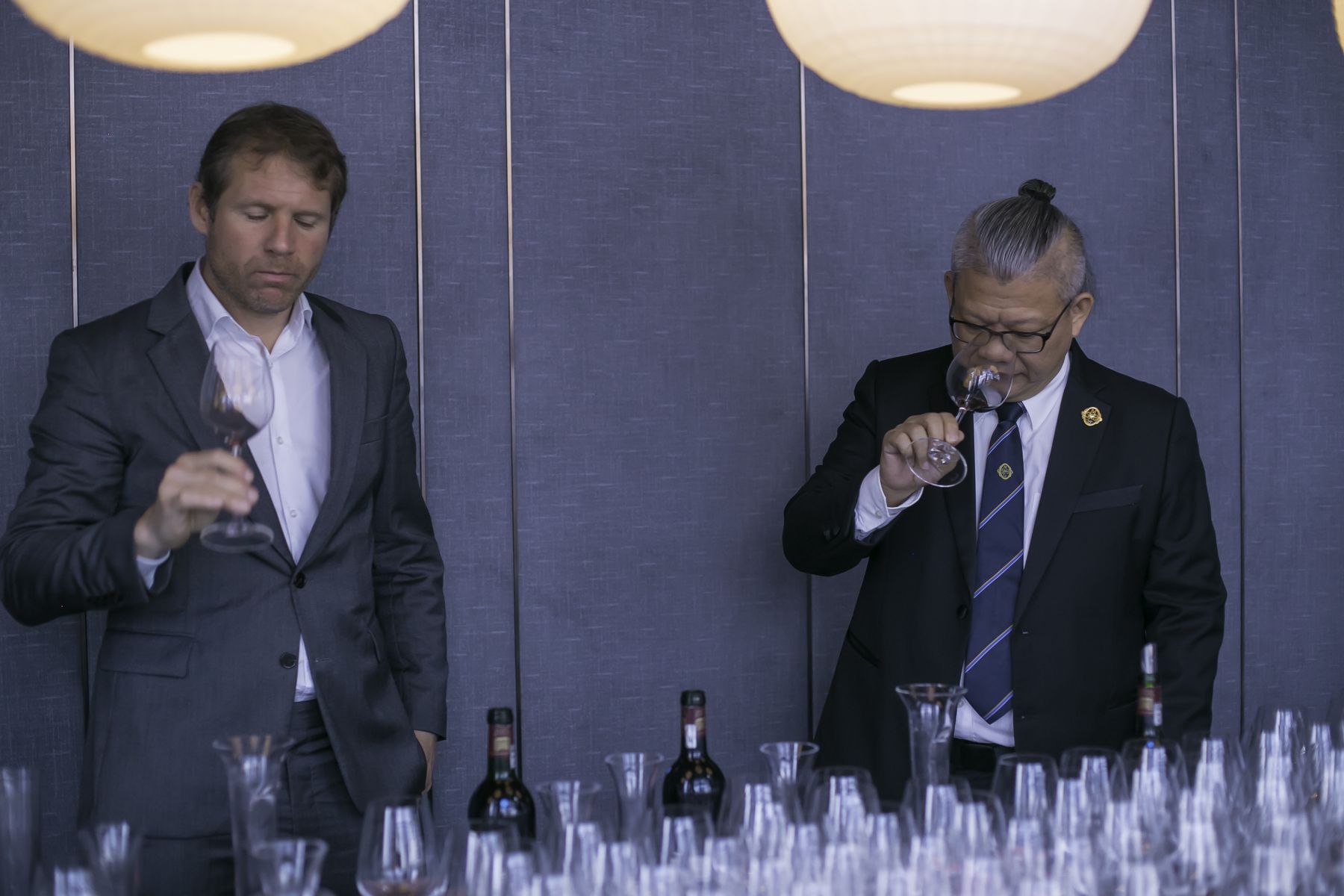
TL;DR: To taste wine, follow the 5 S's: see the colour, swirl the glass, sniff the aroma, sip and let it coat your mouth, then savour the finish. It takes about a minute per glass. Practise with two different wines side by side, and you'll learn what you like much faster than by reading labels.
Have you ever nodded along while someone at the table talked about "notes of blackcurrant", and thought, "I just taste wine"? You're not alone. Most people never learn how to taste wine. They just drink it.
The good news is that tasting is a skill, not a gift. It follows five simple steps that anyone can learn in one evening. You don't need special words, an expensive bottle or a trained nose.
In this guide you'll learn the 5 S's of wine tasting, what each step tells you, how to practise at home in KL's heat, and the small mistakes that hide a wine's flavour. By the end, you'll know what to look for in every glass, and how to say what you like.
What are the 5 S's of wine tasting?
The 5 S's are see, swirl, sniff, sip and savour. You look at the wine's colour, swirl it to release its aroma, smell it, take a small sip and move it around your mouth, then notice how long the taste stays after you swallow. Together they turn drinking into tasting.
Most wine schools teach the same order, even if they name the steps differently. Wine Folly's guide to developing your palate uses look, smell, taste and think. The idea is always the same: slow down and use your eyes, nose and mouth in turn.
Pour only a little, about a third of the glass. That leaves room to swirl without spilling, and it keeps the aroma inside the bowl.
See: what the colour tells you
Hold the glass against something white, like a napkin or a sheet of paper. Tilt it a little and look at the colour from the middle to the edge.
Colour gives you early clues:
- Pale and see-through: usually a lighter, fresher wine.
- Deep and dark: often a fuller, richer wine from a thicker-skinned grape.
- White wine turning gold, or red turning brick-orange at the edge: usually an older wine.
Don't spend long here. A few seconds is enough. The real flavour is still waiting in the glass.
Why do you swirl and sniff wine?
You swirl wine to mix in air, which lifts its aroma out of the glass so you can smell it. Then you sniff, because your nose does most of the tasting work. Smell is where you find fruit, flowers, spice and oak, while your tongue only picks up a few basic tastes.
A UK smell and taste charity explains that a great share of the flavour of food and drink comes from smell, not from the tongue. Some of that smell even reaches your nose from the back of your mouth while you sip. Scientists call this retronasal smell, and it's why wine tastes flat when you have a blocked nose.
How to swirl without spilling
Keep the glass on the table and draw small circles with the base. Do this for five to ten seconds. Once you're confident, you can swirl it in the air.
How to sniff
Take one short sniff, then one longer sniff. Ask yourself simple questions. Is it fruity? Which fruit, red or dark, fresh or jammy? Is there something sweet like vanilla, or earthy like mushroom? There are no wrong answers.
Sip: what your mouth is telling you
Take a small sip and let it roll over your whole tongue for a few seconds. Now notice five things, in plain words:
- Sweetness: dry wine has almost no sugar. Some white wines are a little sweet.
- Sourness (acidity): the fresh, mouth-watering feeling, like biting into a green apple.
- Bitterness: usually small, sometimes on the back of the tongue.
- Tannin: the drying, grippy feeling on your gums and cheeks, like strong tea. Mostly found in red wine.
- Body: how heavy the wine feels. Light like low-fat milk, or full like cream.
You don't need fancy words. "Fresh and light" or "soft and heavy" is a perfectly good tasting note.
What does the finish of a wine mean?
The finish is the flavour that stays in your mouth after you swallow or spit. Count the seconds it lasts. A short finish fades almost at once, while a long finish keeps going. A long, pleasant finish is usually a sign of a better-made wine.
Wine schools count length as one of the key signs of a well-made wine, along with balance, intensity and complexity. That's why this step is called "savour". Pause, breathe out through your nose and see what flavours come back.
This is also the moment to decide one simple thing: do you like it? Your own taste is what matters most.
How to practise wine tasting at home in KL
The fastest way to learn is to compare. Tasting one wine on its own tells you little. Tasting two side by side shows you the difference straight away.
Try two wines side by side
Pick two wines that are clearly different, for example a light white and a full red, or two reds from different countries. Pour a little of each into two glasses. Go through the 5 S's for both and write one line about each.
Keep simple notes
Write the wine's name, what you smelled, how it felt in your mouth, and a score out of five. After ten wines, you'll start to see what you like. In our ProVinum classes, Chris Low teaches a simple scoring method called the Four Pillars, which gives beginners a clear way to judge any glass.
Get the temperature right for our weather
Serving temperature changes how wine tastes, and KL rooms are warm. Wine Folly's serving temperature guide suggests serving reds cooler than room temperature, and whites and sparkling wines colder still. In a warm Malaysian room, that means a red wine is often better after 15 to 20 minutes in the fridge, and a white is better taken out a few minutes before you pour.
Mistakes beginners make
Small habits can hide a wine's flavour. Watch out for these:
- Filling the glass too high. You can't swirl, and the aroma escapes. Keep it to about a third.
- Drinking reds warm or whites ice-cold. Too warm tastes of alcohol; too cold hides the flavour.
- Wearing strong perfume or tasting after spicy food. Both cover up the aroma.
- Holding the glass by the bowl. Your hand warms the wine. Hold the stem; Wine Spectator says any point on the stem is fine.
- Worrying about the "right" words. Say what you notice in your own words.
Learn to taste wine with Chris Low
Tasting wine well comes down to five steps: see, swirl, sniff, sip and savour. Pour a little, use your nose more than your tongue, and always compare two wines side by side. Within a few tastings you'll know what you enjoy and why.
If you'd like a guide in the room, ProVinum Express is our 2-hour beginner wine tasting class in KL and PJ (RM200). Chris Low, a wine professional for over 30 years, walks you through three wines step by step. You can also compare all our wine courses, or read more in our wine guides for beginners.